

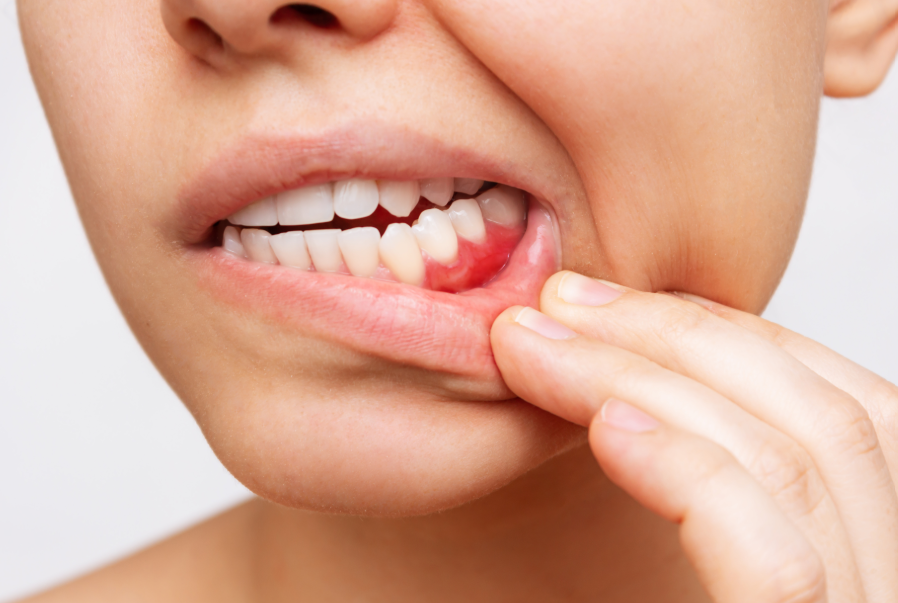
Seeing a little blood in the sink when you brush or floss can be unsettling—but it’s also more common than many people realize. Bleeding gums are often an early sign of gingivitis, a mild form of gum inflammation caused by plaque buildup along the gumline.
The good news is that in many cases, early gingivitis can be improved with consistent at-home care. And the even better news? Small daily changes can make a big difference in how your gums feel and heal.
Improve Your Brushing Technique
One of the simplest ways to help reduce bleeding gums is to adjust how you brush.
Brushing too hard can actually irritate gum tissue and make inflammation worse. Instead, use a soft-bristled toothbrush and gentle circular motions, focusing on cleaning along the gumline without scrubbing aggressively.
Brushing for two full minutes twice a day helps remove plaque more effectively, which can reduce irritation over time.
Don’t Skip Flossing
If your gums bleed when you floss, it can be tempting to stop—but that can actually make the problem worse.
Flossing helps remove plaque and food particles between teeth where your toothbrush can’t reach. When plaque builds up in these areas, it can worsen gum inflammation.
If flossing feels uncomfortable, try going gently and consistently. Many people notice that bleeding decreases after a week or two of regular flossing as gum health improves.
Rinse with Warm Salt Water
A simple saltwater rinse can help soothe irritated gums and support healing.
Mix about half a teaspoon of salt into a cup of warm water and gently swish it around your mouth for 30 seconds before spitting it out. This can help reduce bacteria and calm inflammation.
While it’s not a replacement for brushing and flossing, it can be a helpful short-term support for gum discomfort.
Use an Antibacterial Mouthwash
An antimicrobial mouthwash can help reduce bacteria that contribute to gingivitis.
Look for alcohol-free options if you have sensitive gums, as alcohol-based rinses can sometimes cause dryness or irritation.
Using mouthwash as part of your routine—alongside brushing and flossing—can help improve overall gum health.
Watch Your Diet and Habits
What you eat can also affect your gums.
Sugary snacks and refined carbohydrates feed bacteria in the mouth, which can contribute to plaque buildup. Eating a balanced diet with plenty of vitamins and nutrients—especially vitamin C—can support healthier gums.
Avoiding tobacco products is also important, as smoking significantly increases the risk of gum disease and can slow healing.
Know When to See a Dentist
While at-home care can help with mild gingivitis, persistent or worsening symptoms should not be ignored.
If your gums continue to bleed after a couple of weeks of improved oral hygiene, or if you notice swelling, persistent bad breath, or gum recession, it’s important to see your dentist.
Professional care may be needed to remove hardened plaque (tartar) and treat more advanced gum inflammation before it progresses.
Taking care of bleeding gums early can help protect your long-term oral health and prevent more serious gum disease.
About the Practice
Smile More Dentistry stays true to its name! Our dental team provides comprehensive periodontal therapy and preventive dental care focused on maintaining healthy gums and supporting long-term oral wellness. We work with patients to diagnose and treat gum disease early while offering personalized guidance to improve at-home oral hygiene habits.
Call us at (845) 675-1512 or schedule your appointment online.